Skip directly to search Skip directly to A to Z list Skip directly to navigation Skip directly to page options Skip directly to site content

Hot Topics of the Day|PHGKB
Search PHGKB:

11/17/2023

Hot Topics of the Day are picked by experts to capture the latest information and publications on public health genomics and precision health for various diseases and health topics. Sources include published scientific literature, reviews, blogs and popular press articles.

Sign up MyPHGKB to receive the daily hot topic email alert.

Search Archive:
Archived Hot Topics of the Day By Date

Genetic risk prediction in Hispanics/Latinos: milestones, challenges, and social-ethical considerations.
Betzaida L Maldonado et al. J Community Genet 2023 11
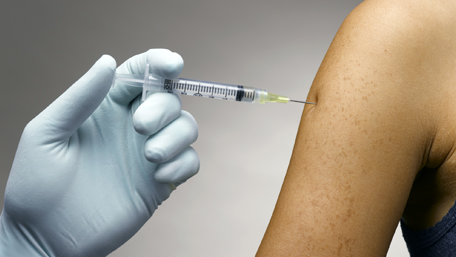
From the abstract: "Recent efforts have focused on increasing racial and ethnic diversity in GWAS, thus, addressing some of the limitations of genetic risk prediction in these populations. Even with these efforts, few studies focus exclusively on Hispanics/Latinos. Additionally, Hispanic/Latino populations are often considered a single population despite varying admixture proportions between and within ethnic groups, diverse genetic heterogeneity, and demographic history. Combined with highly heterogeneous environmental and socioeconomic exposures, this diversity can reduce the transferability of genetic risk prediction models. "

Monogenic etiologies of persistent human papillomavirus infections: a comprehensive systematic review
S Biglari et al, Genetics in Medicine, November 2023

From the abstract: " Persistent human papillomavirus infection (PHPVI) causes cutaneous, anogenital, and mucosal warts. Cutaneous warts include common warts, Treeman syndrome, and epidermodysplasia verruciformis, among others. Although more reports of monogenic predisposition to PHPVI have been published with the development of genomic technologies, genetic testing is rarely incorporated into clinical assessments. In this systematic review, we found that PHPVI has at least 83 monogenic etiologies and a genetic diagnosis is essential for effective management."

Harnessing genomics for antimicrobial resistance surveillance
The Lancet Series, November 2023

From the article: "Historically, surveillance of bacteria harboring antimicrobial resistance (AMR) has relied on phenotypic analysis of isolates taken from infected individuals, which provides only a low-resolution view of the epidemiology behind an individual infection or wider outbreak. Recent years have seen increasing adoption of powerful new genomic technologies with the potential to revolutionize AMR surveillance by providing a high-resolution picture of the AMR profile of the bacteria causing infections and providing real-time actionable information for treating and preventing infection. "

UK first to approve CRISPR treatment for diseases: what you need to know
C Wong. Nature. November 16, 2023

From the article: "In a world first, the UK medicines regulator has approved a therapy that uses CRISPR gene editing as a treatment for diseases. The decision marks another high point for a biotechnology that has regularly been lauded as revolutionary in the decade since its discovery. The therapy will treat the blood conditions sickle-cell disease and ß-thalassaemia. Sickle-cell disease, also known as sickle-cell anaemia, can cause debilitating pain, and people with ß-thalassaemia can require regular blood transfusion. "


Disclaimer: Articles listed in Hot Topics of the Day are selected by Public Health Genomics Branch to provide current awareness of the scientific literature and news. Inclusion in the update does not necessarily represent the views of the Centers for Disease Control and Prevention nor does it imply endorsement of the article's methods or findings. CDC and DHHS assume no responsibility for the factual accuracy of the items presented. The selection, omission, or content of items does not imply any endorsement or other position taken by CDC or DHHS. Opinion, findings and conclusions expressed by the original authors of items included in the Clips, or persons quoted therein, are strictly their own and are in no way meant to represent the opinion or views of CDC or DHHS. References to publications, news sources, and non-CDC Websites are provided solely for informational purposes and do not imply endorsement by CDC or DHHS.
TOP